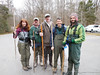
Mark Garland led two days of field trips to various off-the-map locations in southern New Jersey.
 Monday we spent at three spots in the Pine Barrens (dressed up by the marketing people as the Pinelands, these days).
 From one of the area’s numerous sketchy sand roads, we walked in to a generously-sized bog, where White Fringed Orchid (Platanthera blephariglottis) was in bloom. We also found two species of sundews (which I have decided are impossible to photograph; I’m not satisfied with my image of the orchid, either).

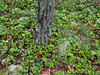 Along the way, huckleberries (Gaylussacia sp.) were in fruit all over the place. The ground cover here is one of my new favorite shrubs, Common Wintergreen (Gaultheria procumbens): crush the leaves for a hit of natural teaberry aroma.
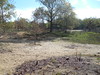
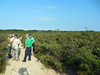 At the end of the day, we strolled through one of the pygmy forests, the pines and oaks dwarfed by lack of nutrients and water — a natural bonsai arboretum.
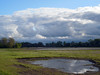
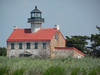 Tuesday we caravaned around the saltmarshes lining the Maurice River, which drains the Millville/Vineland area into Delaware Bay. Hot and sunny, it was a much better day for birds and butterflies, nudging my paltry butterfly life list above the 50 mark. The demure lighthouse at East Point is quite nice.
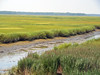 I hadn’t really expected anything too exciting in terms of birds for this trip. So it was a nice surprise to total up the species count for the two days: 44, plus two or three that I didn’t bother to count. I definitely counted Glossy Ibis (Plegadis falcinellus) (I’ve never seen them this far north), Seaside Sparrow (Ammodramus maritimus) (a bird that I rarely see at all), and #415 for my life list, Clapper Rail (Rallus longirostris). We found the rails, about five or six of them, at this tidal gut at spot called Turkey Point, on the other side of the Maurice (locally pronounced “Morris”). A- looks at the birds, from some distance and somewhat backlit, not visibly distinguished from King Rails, but you go with the local expert’s knowledge of distribution.