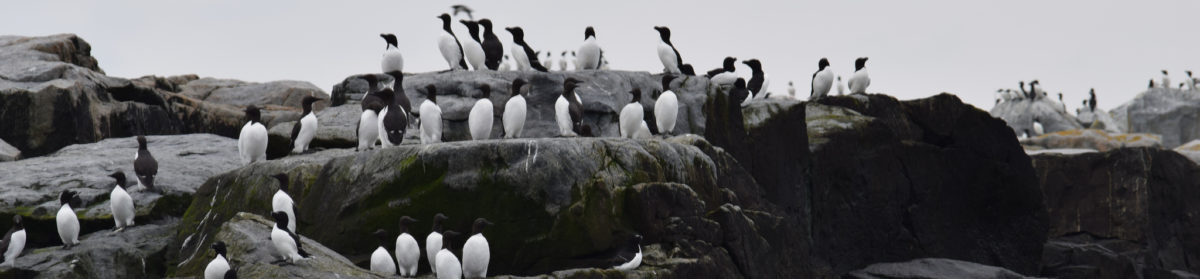
N., one of my volunteer nest box monitors, wrote up the program for her Master Naturalists chapter. Good pix!
Category: In the Field
Williamsburg midweek getaway
I put together a quick road trip to Williamsburg, anchored by a visit to the recently expanded Muscarelle Museum of Art on the William & Mary campus for its fine exhibition of women Abstract Expressionists.
After that, it was field trips:
- to the tiny but mighty Williamsburg Botanical Garden: scoliid wasps and nomad bees spotted among the Golden Alexanders;
a short walk along the Basset Trace Nature Trail, carefully tended by the Virginia Master Naturalists Historic Rivers Chapter; oddly, you drive through Colonial Williamsburg and park next to a hotel building to get to the trailhead;- and on the way home, a stop at Westmoreland State Park on the lower Potomac: friendly rangers and a solitary Rattlesnakeweed (Hieracium venosum) that seems to be out of its vouchered range.
On the back roads of U.S. 17 and Virginia 3, I lost count of the number of Baptist churches, as well as yard signs urging YES or NO in the upcoming referendum [Narrator: David is against the measure].
By Jimmy Van Heusen: 2
An easy saunter up the C&O Canal from Carderock with Nature Forward’s Stephanie Mason, Genevieve Wall riding shotgun, and some familiar bird and plant people. We got stuck on “High Hopes,” most of us wrinklies remembering this novelty song from an animation seen on Captain Kangaroo, after watching two ants dragging a dead spider twice their size across the towpath.
Genevieve spotted a Silver-haired Bat (Lasionycteris noctivagans) roosting. Stephanie pointed out Smooth Rockcress (Borodinia laevigata (= Boechera laevigata)), a new plant for me. We all heard Louisiana Waterthrush singing very clearly, but nobody got eyes on it. Another critter with high hopes: an American Beaver (Castor canadensis) swimming upstream in an arm of the Potomac.
Genevieve and I collaborated to reconstruct the chorus of New Order’s “Bizarre Love Triangle” (not “strange,” as I think I told the group) to serenade a trio of Wood Ducks, two drakes and a hen.
At the park: 157
From this week’s report:
Rolling along. We’ve got 5 active nests, and depressions in several other boxes.
N. spotted a wee Ribbon Snake. The first Spring Beauties are starting to flower…
Until next Sunday,
At the park: 156
First report of the season for our nestboxes for Wood Duck and Hooded Merganser:
As I (successfully, for once) predicted, our birds have not begun laying in our 16 boxes, due to the snow and cold in February. We added fresh chips to all and trimmed back vegetation around some of the boxes along Barnyard Run.
We have plenty of plastic bags in the shed for carrying chips; we have almost used up our supply of chips. I’ll make a note for next winter to request more chips.
I will bring supplies to touch up the numbers on a couple of the boxes.
L. spotted a handsome Dark Fishing Spider (Dolomedes tenebrosus) in the shed.
See you next Sunday, same time and place. Remember that we switch over to Daylight Saving Time at 2 AM that morning….
Thank you!
My year in hikes and field trips, 2025
Most of my outings are walks rather than hikes these days.
- Multiple visits to Walker Nature Center, Reston, Fairfax County, Va.
- With Virginia Native Plant Society Potowmack Chapter (including “the grass bunch”), at Huntley Meadows Park (and), Runnymede Park, Wakefield Park (and), Confederate Fortifications Historic Site, Hemlock Overlook Regional Park, Roundtree Park, Elklick Woodlands NAP&—all Fairfax County, Va.; and Fort C. F. Smith Park, Arlington County, Va.
- With Nature Forward, Lake Artemesia, Prince George’s County, Md.; Green Ridge State Forest, Allegany County, Md.; Eastern Neck NWR, Kent County, Md.; Kenilworth Aquatic Gardens, Washington, D.C.; Pennyfield Lock, Montgomery County, Md. (and); National Arboretum, Washington, D.C.; Violette’s Lock, Montgomery County, Md.
- New Mexico circuit: 1, 2, 3, 5, 6, 8
- Great Backyard Bird Count 2025 at the Glade, Fairfax County, Va.
- Geology of the Piedmont with Clifton Institute
- Huntley Meadows Park bird-a-thon, Fairfax County, Va.
- North Carolina-Virginia Coastal Plain and pelagic with Victor Emanuel Nature Tours (VENT)
- NABA counts: Occoquan Bay area, Prince William County, Va.; Mount Vernon, Fairfax County, Va.
- Sunnyside bioblitz, Rappahannock County, Va.
- Raines bioblitz, Rappahannock County, Va.
- Clifton Institute-sponsored odonate and butterfly counts, Fauquier County, Va.
- Pony Pasture, Richmond, Va.
- Virginia State Parks: Widewater, Natural Bridge, James River
- Dragon’s Tooth trails, Roanoke County, Va.
- Grassy Hill NAP, Franklin County, Va.
- Fernbrook Natural Area bioblitz, Albemarle County, Va.
- Botanizing in Leopold’s Preserve, Fauquier County, Va.
- Lichen workshop at Clifton Institute
- CBCs: Seneca and Central Loudoun
Yet another middling successful season of monitoring nest boxes at Huntley Meadows Park, Fairfax County, Va. I performed invasive surveys and management in several locations in Northern Virginia, including the Nature Conservancy’s Fraser Preserve.
My year in iNaturalist, 2025
I’m backfilling iNaturalist with photos I posted to Flickr years ago, most of which I have good location information for. And I did some major traveling this year. So my species numbers are up.
Christmas Bird Count 2025: Central Loudoun
Cold front blowing through at mid-day: a sprinkle of rain, then 20+ mph winds. The trees around the Ashburn Library pond were birdier than usual (I spotted a Ruby-crowned Kinglet), as if to compensate for the lack of interesting birds on the pond. The ponds at Graves Lane/Corder Place now have swan decoys posted, perhaps to discourage the Canada Geese, at which task they were moderately successful; unfortunately, they may have discouraged the interesting ducks, too.
We found a few Eastern Bluebirds (Sialia sialis) against the gray skies.
Christmas Bird Count 2025: Seneca
The CBC for the Seneca count circle took place on 14 December. Overnight left a frosting of snow, followed by dropping temperatures and wind. I lost two counters due to illness, a third to the weather, and a fourth to travel. Nevertheless, my team in sector 14 turned up 47 species (pending returns from one more feeder watcher). Lake Fairfax was nearly completely iced over, with nothing but Canada Geese loafing in the open water and a lonely Ring-necked Duck foraging. Our special birds were (pending review) Cackling Goose (Branta hutchinsii), Broad-winged Hawk (Buteo platypterus), and Orange-crowned Warbler (Leiothlypis celata).
I started an iNaturalist project to keep tabs on possible sightings on future counts. So I was at least able to add a Dark-eyed Junco (Junco hyemalis) to the project.
Meterstones, 2025
Small accomplishments during the year, not otherwise accounted for. Not major milestones, but bigger than inchstones.
- I completed 1000 hours of service as a Virginia Master Naturalist.
- I repainted my front door, using a color match of the paint under the kickplate: alas, my cluster association palette calls for a paint color no longer offered by any vendor. My paint job looks OK from the curb, but not that great close up.
- I’m wrapping up my fifth Christmas Bird Count (CBC) as a sector leader in the Seneca count circle.
- I earned a Grognard Mirabilaire badge with Wikipedia. Still no barnstars.

Leopold’s Preserve November 2025
A quick stroll in woods and meadows of a section of Leopold’s Preserve that I hadn’t seen before, led by Marion Lobstein and Claudia Thompson-Deahl. We stopped for a look at the ruins of the Brent family homestead. Red-legged Grasshoppers (Melanoplus femurrubrum) were still hopping.
Violette’s Lock 2025
I’ve been to this bit of the C&O Canal at least once before back when I was starting to learn plants, probably more. Wednesday it was very quiet: I think we’re far enough upriver to be out of the flight paths for DCA. Sassafras showing fall reds and yellows, some lingering asters like Symphyotrichum cordifolium. I found an ichneumonid wasp, tentatively Coleocentrus rufus, and an oil beetle, Meloe sp. J. D. Pinto in BugGuide says, “It is difficult to distinguish females of Meloe americanus from M. impressus without examining pygidial structure (americanus females have a narrow apical flange).” (link added)
Charlottesville overnight
I did a quick overnight to Charlottesville to visit two sites.
First up was James River State Park. This was supposed to be an easy stroll to get park #27 punched on my Trail Quest ticket. I didn’t intend to break out my camera with the long lens. But, walking along the River Trail, I found a damselfly that I didn’t recognize, so I scooted back to my car to get the camera. The damsel turned out to be male and female Smoky Rubyspots (Hetaerina titia). Pretty cool!
Then this morning I participated in a short two-hour bioblitz at the Nature Conservancy’s Fernbrook Natural Area. We worked in the parcel that was newly added to the property; it showed a long life as pasture and homestead, with a stupendous stand of bamboo! Fortunately, there were some natives to be found, and I added Paspalum laeve to the property’s iNaturalist project (as well as to my own list of species, I discovered to my slight surprise). And, alas, it looks like I am the first to document Spotted Knapweed (Centaurea stoebe) at the site.
Occoquan Bay NWR
Yet another trip to Occoquan Bay NWR, this time led by Ken Rosenthal of Reston Association’s Walker Nature Center. The birding was rather slow; I lugged my scope to get some decent views of Bald Eagle and Osprey.
Otherwise, I picked up some new personal species records for iNaturalist, including Rough Cocklebur (Xanthium strumarium), Differential Grasshopper (Melanoplus differentialis), Sugarcane Beetle (Euetheola humilis), and Transverse-banded Flower Fly (Eristalis transversa) A lot of the interesting stuff was along the shore of the bay.
VNPS 2025: Dragon’s Tooth and Grassy Hill
Two short walks on the lower reaches of rocky trails to Roanoke area specialties.
Bradley Simpson steered us on the trail to Dragon’s Tooth in Roanoke County—we didn’t traverse any of the truly rugged patches. The destination species here is Buffalo Nut (Pyrularia pubera), found in fruit by participant S between the parking area and the biffy. Buffalo Nut is kin to Piratebush in that both are hemiparasitic, and Piratebush can also be found at Dragon’s Tooth.
Other goodies included generous blooms of Collinsonia canadensis, Autumn Coralroot (Corallorhiza odontorhiza) in fruit, and a bit of Bowman’s Root (Gillenia trifoliata) (thanks, SA!) showing one spent flower. This Chestnut Oak (Quercus prinus) is giving some staying power vibes.
Nate Silver, helpful guide from last year, took us on part of the Slope Trail at Grassy Hill NAP. As with Dragon’s Tooth, much of the flora here was done flowering and fruiting, for example a skullcap (Scutellaria sp.), Clasping Milkweed (Asclepias amplexicaulis), Canadian Burnet (Sanguisorba canadensis), and Goat’s Rue (Tephrosia virginiana).
We didn’t get high enough to find the poster child for the Preserve, but Nate gave me a tip on where to find fameflower on my next trip to Franklin County. And he did locate a lovely patch of flowering Blue Monkshood (Aconitum uncinatum) for us.
On my drives downstate, I usually see a sign for some community activity that rings my WTF bells. This time it was cow pie bingo. Hmm, it looks like I wouldn’t have to travel far to play.