Japanese tongue twisters and suchlike.
Not so twisty, but this one might cause a stumble:
Tonari no kyaku wa yoku kaki kuu kyaku da
The nextdoor guest is a guest who eats a lot of persimmons.
theater, natural history and conservation, the utterly mundane, and Etruscan 8-tracks
Japanese tongue twisters and suchlike.
Not so twisty, but this one might cause a stumble:
Tonari no kyaku wa yoku kaki kuu kyaku da
The nextdoor guest is a guest who eats a lot of persimmons.
What Will Art Look Like in the Metaverse?, by Dean Kissick.
In late-19th and early-20th century Paris, Rousseau and his contemporaries (Paul Gauguin, Georges Seurat, Pablo Picasso, etc.) were busy inventing bohemian modernity, creating new ways of living and of seeing the world. In our century, that visionary role appears to have passed from the artists to the engineers, to Zuckerberg and his ilk. Who else tries to invent new universes? Who dares spin grand utopian fantasies? Artists don’t anymore. It’s Silicon Valley’s Promethean founders who try — and routinely fall short.
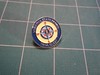 I earned my next pin for Virginia’s Trail Quest project, so there’s that.
We did get in a full season of nest box monitoring at Huntley Meadows Park, Fairfax County, Va.
For another year, the Mason and Bailey Club did not meet, alas. I scouted Potomac Overlook Regional Park, Arlington County, Va.; Turkey Run Park, Fairfax County, Va.; Carderock, C&O Canal National Historic Park, Montgomery County, Md.; the Boundary Bridge area of Rock Creek Park, Washington, D.C. Maybe next year we can do Boundary Bridge, and I really want to show off Huntley Meadows.
I followed the phenology of a patch of Aralia spinosa near my house, down by the Ridge Heights Pool; we liberated a Honey Locust (Gleditsia triacanthos) from an overgrowth of non-native invasives at Idylwood Park; and all of us chased cicadas.
Some months are a little skimpy this year, for the expected reasons. The first sentence (more or less) of the first post for the last twelve months:
The year in review:
There are a few hours left in the giving year.
(Who will win the dubious prize of last begging e-mail of the year? Judges are monitoring my inbox hourly.)
What organizations are worthy of support? Consider this list as some recommendations from me.
These are the groups and projects to which I gave coin (generally tax-deductible), property, and/or effort in 2021. Limited travel and in-person work this year, so my out-of-pocket expenses continue to be down.
Bert Harris at the Clifton Institute sucked me into odonates, so my observation count is up again this year. And of course we had the cicadas to chase.
Next weekend is spoken for, so my first day hike will have to be a Boxing Day walk at Walker Nature Center. It proved to be a rather birdy trip, with 15 species spotted in 75 minutes, including four Northern Flickers (Colaptes auratus) together in one tree and a Brown Creeper (Certhia americana) high in a White Oak.
The trails in the northern tract look messy on the map, but make more sense on the ground: a box around the property, and an stone dust inner loop, with some connectors between. And I found a footbridge (#37) over the Snakeden Run inlet to Lake Audubon that would make the property easily accessible from home on foot. The bridge wasn’t there the last time I looked, but it’s weathered, so perhaps it was temporarily removed while the stream was being rebuilt.
I’ll go ahead and link to my Goodreads list now, even though I’ll probably finish A Thousand Acres before the of the year. Top marks for
And one road trip, for my birthday, staying within the commonwealth. Missed Tofurky Day at Charlie’s two years running.
Overnight stays in 2021:
I scratched out one new space between delta and omicron:
On Sunday, my plucky team of eight braved winter winds and a brief period of sleet for the sector 14 count. We put up a respectable count of 40 species; next year I hope to squeeze out a bit more (maybe Rock Pigeon at Reston Town Center?). Avian highlight: an adult Bald Eagle (Haliaeetus leucocephalus) being chased out of a Red-tailed Hawk’s (Buteo jamaicensis) airspace above the Gerry Connolly Cross County Trail at Leigh Mill Road. Mammalian highlight: two River Otters (Lutra canadensis) doing their otter thing in Lake Fairfax.
Blue Jay (Cyanocitta cristata) numbers were down, perhaps reflecting the semi-mysterious illness afflicting songbirds in the mid-Atlantic this past summer.
I spent a lot of time scouting, but the team knowledge was perhaps more important, and a little liberating.
More takeaways:
Final results for the Seneca circle will be released by the compiler January-February.
Not, strictly speaking, Muzak, because it was clearly an album/CD that I was listening to in my urologist’s office (while the receptionist was doing a great job of Fully Committed with a difficult patient): arranged for breathy girls’ choir and piano, pop hits from the 80s and 90s. I could make out through the pillowy arrangements and crappy speakers
And the mystery as a bonus, because I cannot make out who committed such an enormity. Spotify is fine for finding one song, but not an entire track list. But wait—the Googles came through. The CD (Solstice by Scala & Kolacny Brothers) was on shuffle!
I don’t think you’ve lived until you’ve experienced this version of “Creep”:
As Martin Vanderhof said,
GRANDPA [surveying the group]: Well, sir, you should have been there. That’s all I can say—you should have been there.
All over New York City, bagel makers say, a schmear shortage is threatening one of the most treasured local delicacies: a fresh bagel with cream cheese.
 The shelf was getting a little unbalanced, with too much fiction, but a tip from NPR’s Books We Love led me to Dreilinger. Of the Thoreau, I’ve got The Maine Woods and Cape Cod to read. The Bellotti is for a book club at work—not my usual cup of tea, but I want to contribute to the discussion. I have promised myself that I will crank through another story in the French parallel text collection; will I ever find time for the Echenoz? Juggling two volumes is too much trouble for the subway.
In many ways, the streamers [like Netflix and Amazon] have been rebuilding Hollywood’s old studio system. That system, which lasted roughly from the 1920s to the 1950s, was powered by vertical integration. Major studios like Paramount or Warner Bros. didn’t just own a bunch of soundstages, but also the theater chains that screened their movies, meaning they had complete control over every aspect of a movie’s creation—a straight line down from film production to distribution to exhibition.
Even the sharp corners of ostensibly “bad” moves are being rounded over:
Critic Judy Berman argues in The Baffler, for instance, that the internet and the larger “streaming void” it perpetuates have slowly been killing the cult film, the “scruffy, desperately original, and intermittently brilliant works of transgressive art” once enjoyed communally on the midnight circuit, but now cynically engineered for social media engagement, à la Sharknado. Naturally, it’s not just the makers of would-be Rocky Horrors who are suffering.
Although she mentions the creative financing that powered Irving Levin’s distribution of Ida Lupino’s Filmmakers movies, she misses the opportunity to comment on the similar pattern shown by The Cannon Group during its ownership by Golan and Globus.